
For female small business owners building brands from their art, the hardest part often isn’t the creating, it’s the creative business management that comes after. Many creative entrepreneurs feel energized in the studio and instantly drained by pricing decisions, inconsistent sales, admin tasks, and the pressure to “market like everyone else,” which are some of the most common business challenges for creatives.
That tension can quietly shrink confidence and leave artistic career development feeling stalled, even when the work itself is strong. The business side is a learnable skill set that can support the creative life instead of competing with it.
Quick Summary: Grow Without Losing Your Spark
● Set clear pricing strategies that reflect your value and support sustainable growth.
● Use simple contracts and invoices to protect your work and get paid smoothly.
● Build basic business workflows that keep projects organized and reduce overwhelm.
● Track lightweight finances so you understand cash flow and make confident decisions.
● Practice authentic marketing techniques that attract the right clients without feeling salesy.
Set Up Pricing, Contracts, Invoicing, and Workflow
This process helps you turn “I hope they pay” into “I know what to charge, what to sign, and when to invoice.” It matters because confidence is a leadership skill, and when your money systems are clear, you can make decisions faster, negotiate calmly, and grow without burning out.
1. Choose one pricing model you can explain
Start by picking a primary pricing model for your creative services (hourly, project, retainer, or packages) and write a one sentence explanation you can say out loud. The simplest starting point is aligning price with scope and outcomes, since the value they’re looking to gain is what clients are truly buying. This makes quoting feel less personal and more professional.
2. Write a “scope and boundaries” mini-brief
For your most common offer, outline what’s included, what’s not included, how many revisions, and what triggers extra fees. This mini-brief becomes the backbone of every proposal and prevents you from overdelivering to prove your worth. Clear boundaries protect your time, energy, and creative spark.
3. Use a contract checklist before you start work
Before you begin, confirm the essentials: deliverables, timeline, payment schedule, late fees, ownership and usage rights, and what happens if the project pauses or ends early. Save this as a reusable checklist so you are not reinventing it under pressure. A simple, consistent contract habit helps you lead client relationships with authority.
4. Set an invoicing routine and payment terms
Decide when you invoice (upfront deposit, milestones, or after delivery) and put the exact due date on every invoice. Many service-based businesses invoice in arrears, but if cash flow feels tight, consider partial upfront payments so you are not financing the project yourself. Consistent invoicing reduces awkward follow-ups and steadies your income.
5. Build a simple workflow and money folder system
Create a repeatable workflow with five stages: inquiry, booked, in progress, delivered, paid. Pair it with basic financial organization: one folder for contracts, one for invoices, one for receipts, and one tracker that lists invoice date, due date, and payment status. This small system makes it easier to spot what needs your attention each week.
A Simple Weekly Rhythm That Protects Your Spark
A workflow only builds confidence if it fits inside real life, especially when you are the creator ,the manager, and the decision-maker. This simple rhythm helps women entrepreneurs keep projects moving, money visible, and marketing consistent without living in constant catch-up. It also nudges you toward sustainable business practices because 91% of companies are disclosing sustainability information, and a steady cadence makes it easier to track what matters.
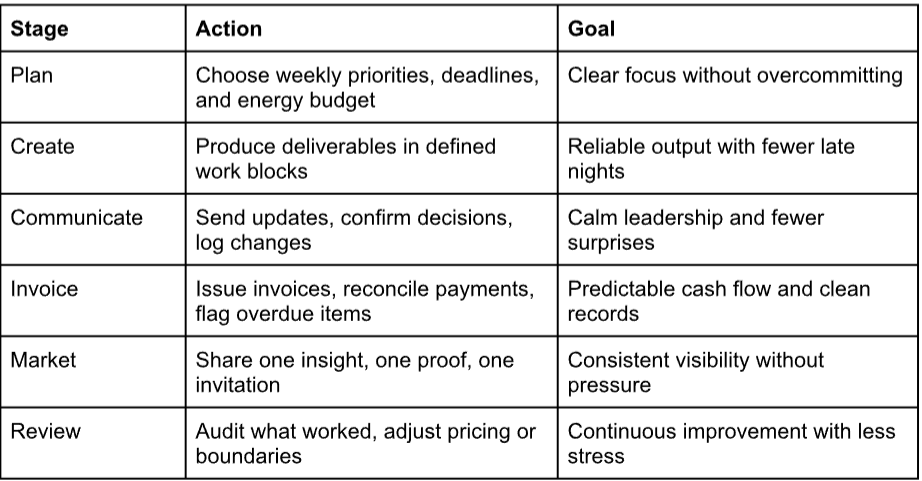
Each stage feeds the next: planning protects your creative time, communication prevents scope drift, and invoicing turns effort into revenue. Marketing stays lighter when you review results weekly and keep only what is working.
Common Questions, Calm Answers
Q: How can I decide the right prices for my creative services without feeling unsure or overwhelmed?
A: Start with a simple baseline: your costs, your time, and the value of the outcome you deliver. Choose one pricing structure you can explain in one sentence, then raise clarity by listing exactly what’s included and what counts as extra. A simple business system can keep your pricing decisions repeatable instead of emotional.
Q: What are simple ways to create contracts and invoices that protect my work but don’t add stress?
A: Keep it minimal: scope, timeline, payment terms, revision limits, and who owns what until you’re paid. Use the same template every time, and add a short “change request” line so edits don’t quietly expand the project. Your goal is calm expectations, not legal perfection.
Q: How do I set up a basic, manageable workflow to keep creative tasks organized and efficient?
A: Pick three fixed check-in points each week: plan, create, and send updates. Use one capture list for ideas and one short “today” list so your brain stops trying to hold everything. Protect one uninterrupted block for deep work before you open messages.
Q: What tips can help me market my creative work authentically without feeling like I’m being pushy or salesy?
A: Share proof, not pressure: a behind-the-scenes lesson, a client win, or a before-and-after. End with a gentle invitation that tells people what to do next and who it’s for. If you’re new, you’re not alone: the GEM report notes many people are intending to start a business, so your honest updates help others trust you faster.
Q: If I’m just starting to get serious about my creative projects, how do I handle the financial side like tracking income, expenses, and taxes effectively?
A: Start with two habits: record every payment the day it arrives and categorize expenses once a week. Keep a separate tax set-aside percentage so you’re not surprised later, and save receipts digitally in one place. When it feels fuzzy, simplify your categories rather than adding more.
Q: How can AI help boost our creativity and spread the word about our business?
A: AI can boost your creativity by helping generate fresh ideas, design content, and streamline marketing efforts, making it easier to create engaging materials that resonate with your audience. It can also help automate content distribution and personalize messaging to reach the right customers more effectively. Resources like Adobe Firefly’s guide to generative AI offer practical insights into using AI tools to enhance creative workflows and amplify your brand’s visibility.
Grow Your Creative Business with Simple Systems That Stick
The hard part of growing a creative business isn’t talent, it’s keeping the spark alive while the business side gets real. The steadier path is a calm, repeatable mindset: choose clarity over chaos, build support systems, and adjust in small cycles instead of reinventing everything.
When that becomes the norm, business tool adoption feels like relief, routine business reviews feel grounded, and sustaining creative success stops depending on willpower alone. Small systems protect your creativity while your business grows. Pick three tools you’ll actually use, schedule a monthly check-in, and tighten one system at a time so creative career growth stays connected to entrepreneurial motivation. That rhythm creates resilience, steadier income, and more room to make work you’re proud of.
Article written by Guest Blogger:
Derek Goodman
https://www.inbizability.com/